Showing posts with label NASA. Show all posts

Blue Moon Today's

Blue Moon

Blue Moon Tonight ..!

Blue moon is an additional full moon that appears in a subdivision of a year.

A Blue moon is defined as any time there is a second full moon during a calendar month, according to NASA. 

While most years have 12 full moons, this year has 13.

Blue moons are very rarely blue. Most are pale gray and white, resembling a moon on any other night.

Past :

The March 1946 Sky and Telescope article "Once in a Blue Moon" by James Hugh Pruett misinterpreted the 1937 Maine Farmers' Almanac. 

"Seven times in 19 years there were and still are 13 full moons in a year. 

This gives 11 months with one full moon each and one with two. 

This second in a month, so I interpret it, was called Blue Moon.


Read More

NASA Got Up Close of Pluto

NASA got new images of Pluto


NASA Got Up Close And Personal With Pluto, The Data Blows Their Minds

July 14, the spacecraft collect the High Resolution omages and data that we have ever seen before. Hope we see it again in future as neariest period adout another 18 months. NASA relesed the images of pluto..

Pluto's backside and about the nitrogen glaciers that are scaping across its surface.

Four images, taken when New Horizons was 280,000 miles away from Pluto, were combined with color data to make this enhanced image of the heart-shaped "Tombaugh Regio."
The exaggerated color scheme helps to highlight some of the intriguing diversity of Pluto's surface composition.


Read More

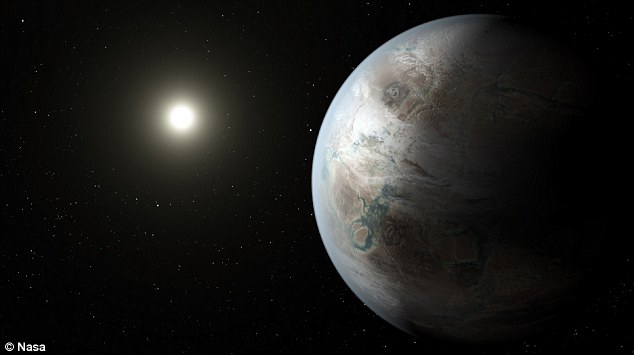
NASA's kepler mission has discovered kepler-452b

NASA's Kepler

NASA's Kepler spacecraft was launched in 2009.
The objective of the mission is to explore the structure and diversity of planetary systems.

Discovered Kepler-452b

NASA's kepler mission has discovered kepler-452b

The First near earth size planet in the Zone of habitable.

Its like, the zone around sun-like stars.

The habitable zone refers to the area around a star where liquid water could pool on the surface of an orbiting planet.
The Kepler-452b brings the total number of confirmed planets to 1,030.

NASA's Ames Research center in Moffett field, California.

John Jenkins said, "We can think of Kepler-452b as an older, bigger cousin to Earth, providing an opportunity to understand and reflect upon Earth’s evolving environment".

The zone of planet spend longer years then compare to Earth.

As they assumed, about the planet spent 6 million years in the habitable zone of its star.

60 percent larger in diameter than compare to the Earth.

It is located about 1,400 light years away (Constellation cygnus).

Chris Carberry, executive director of Explore Mars,Non-Profit organisation.
They aims to advance the goal of sending humans to Mars.

He explained, in a email,"The Kepler announcement was inevitable and we should expect many more similar discoveries over the upcoming years"

Read More